

Received an IRS CP14 Notice? What Arizona Taxpayers Should Do
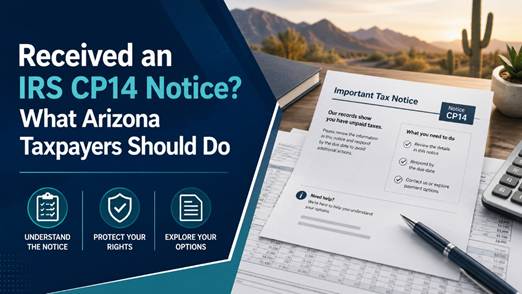
Finding an IRS envelope in the mailbox can make an ordinary day feel considerably worse. A CP14 notice is serious, but it does not mean the IRS is auditing you or preparing to seize property immediately. It is generally the first bill sent after the IRS processes a return and determines that tax, penalties or interest remain unpaid.
The notice deserves prompt attention and careful review before money is sent or a payment plan is selected.
Confirm What the CP14 Notice Says
Start with the tax year, balance and payment deadline printed on the letter. A CP14 normally identifies the unpaid tax, penalties, interest and any credits already applied. The IRS generally requests payment within 21 days, although the date shown on the notice controls.
Compare the figures with your filed return, bank records and earlier IRS correspondence. A balance can arise because the return showed tax due, an estimated payment was missed, withholding was insufficient or a payment was not credited correctly.
Keep the entire notice. The identifying number, tax period and contact details may be needed if you call the IRS or ask a tax professional to review the account.
Check Whether a Payment Was Already Made
Do not assume the notice is correct merely because it came from the IRS. Processing delays and payment posting problems can occur. Sign in to your IRS Online Account and review the balance and payment history.
If a payment cleared your bank but does not appear on the account, gather proof before contacting the IRS. Useful records may include a cancelled check, bank statement, electronic confirmation number or receipt.
Paying the same amount again can create another problem. When the balance appears wrong, it is usually better to document the payment and address the mismatch than send a duplicate payment out of fear.
Pay What You Can Without Ignoring Essentials
If the balance is accurate and full payment is affordable, paying by the notice deadline limits additional interest and penalties. When the entire amount cannot be paid, a partial payment may still reduce future charges.
Do not empty an account needed for rent, food, utilities or medical care without first reviewing the available alternatives. The correct response depends on the amount owed, current income, necessary expenses, assets and whether other returns remain unfiled.
Most IRS resolution options require taxpayers to have filed all required returns. Missing returns should therefore be identified before an application begins.
Consider the Available IRS Resolution Options
A straightforward balance may be handled through a short term payment arrangement or monthly installment agreement. Taxpayers facing genuine financial hardship may need to explore a temporary collection delay, often called Currently Not Collectible status.
Penalty relief may be possible when IRS requirements are met. An Offer in Compromise can settle qualifying tax debt for less than the full balance, but it is not available simply because someone wants a lower payment. The IRS reviews income, expenses, assets and expected ability to pay.
The best option is not always the one advertised most heavily. An affordable installment agreement may be more realistic than an offer, while a person unable to meet basic living expenses may need a hardship based approach.
Do Not Let the Notice Become an Emergency
A CP14 is an early billing notice, giving the taxpayer time to verify the debt and choose a response. Ignoring it can lead to additional notices and more serious collection action later.
Note every deadline. Interest and applicable penalties generally continue while the debt remains unresolved.
Professional help becomes particularly useful when several years are involved, returns are missing, the amount appears wrong, an existing payment plan has failed or the proposed monthly payment is unaffordable.
Get Help With an IRS CP14 Notice in Mesa
Tax Debt Advisors, Inc. has helped Arizona taxpayers resolve federal tax problems since 1977. Scott Allen, EA, works directly with clients to review IRS records, verify balances and explain the available resolution choices without promising a result before the facts are known. If you received a CP14 notice or cannot afford the balance shown, call Tax Debt Advisors at 480 926 9300 for a free consultation.