
Negotiating IRS Debt in Mesa AZ
Navigating IRS Debt: How to Negotiate IRS Debt in Mesa, AZ
Receiving official mail from the Internal Revenue Service is a universal trigger for anxiety, particularly when an individual is already carrying the heavy burden of unpaid back taxes. For residents living in Mesa, Arizona, and the surrounding East Valley, a common document arriving in mailboxes is IRS Letter LTR 2273C.
Understanding what this letter signifies, knowing how to establish a formal agreement, and taking the correct steps to clear missing tax returns are critical components of achieving long-term financial stability. Working with a dedicated, licensed professional—such as Scott Allen, EA at Tax Debt Advisors, Inc.—allows taxpayers to efficiently negotiate IRS debt in Mesa, AZ, avoid harsh collection tactics, and secure a manageable pathway out of tax debt.
Understanding IRS Letter LTR 2273C
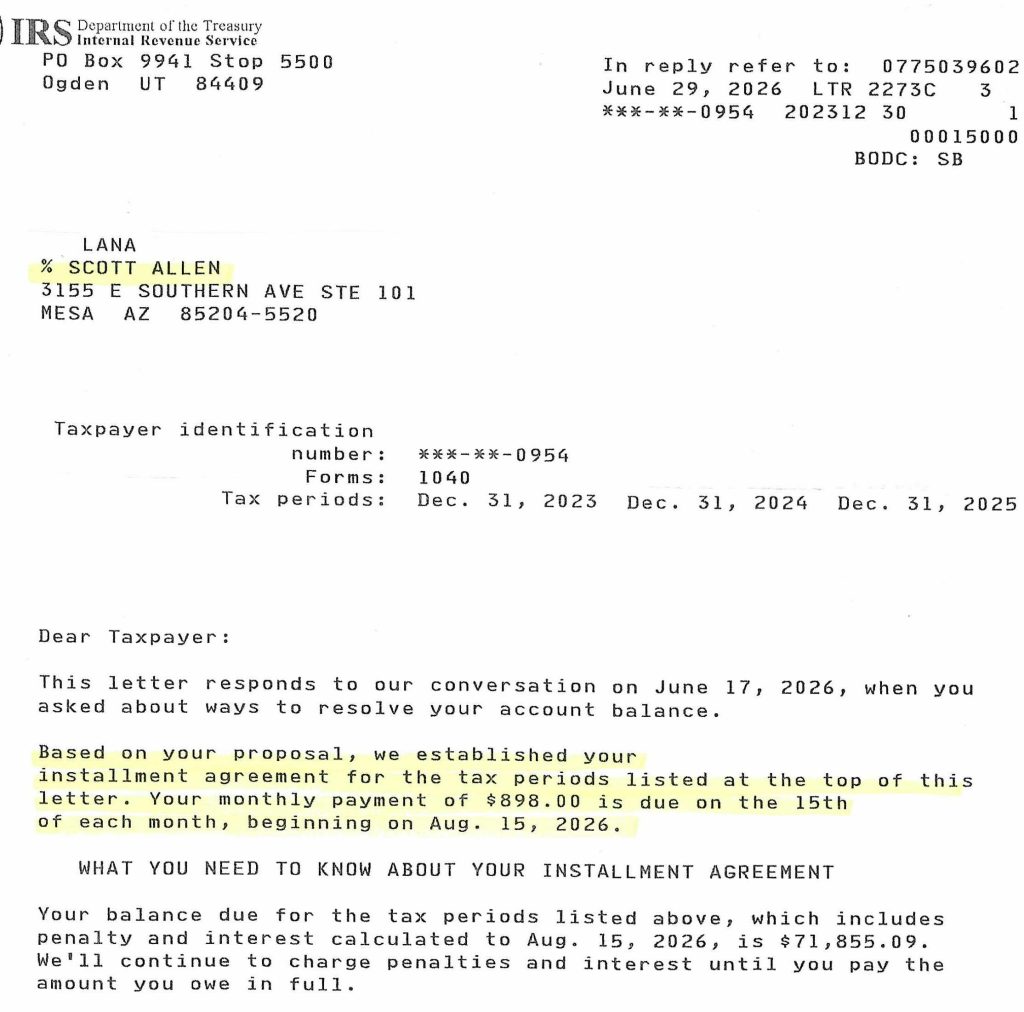
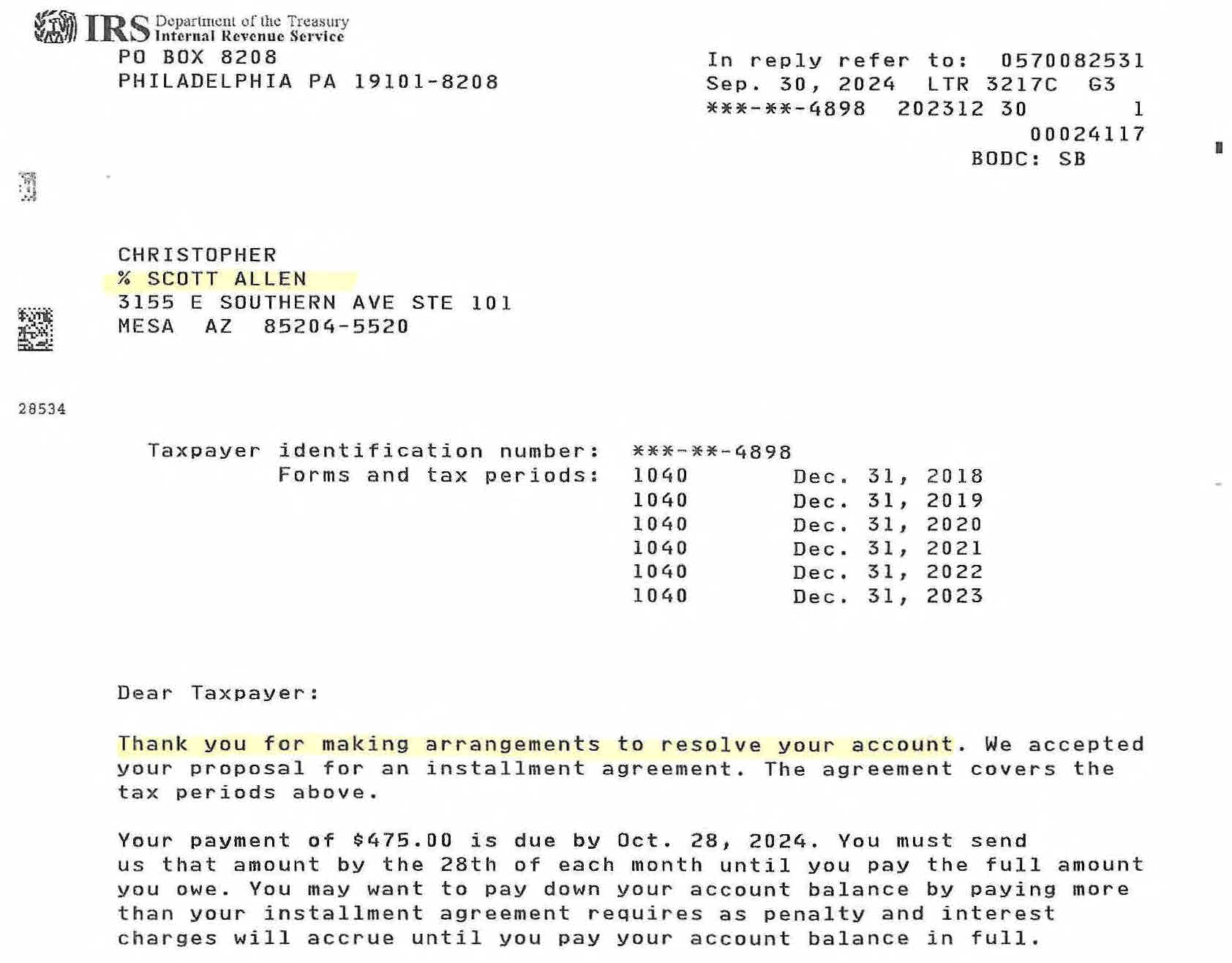
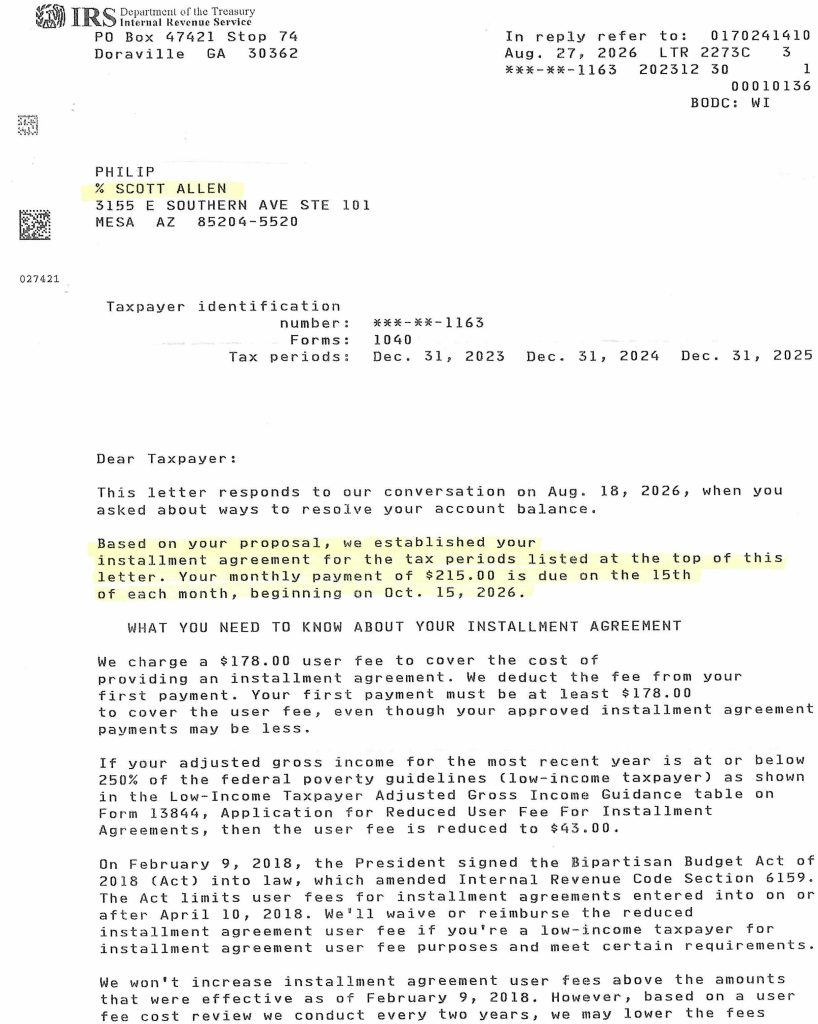
When the IRS issues Letter LTR 2273C, it serves as formal written confirmation that an installment agreement request has been accepted or modified.
Unlike aggressive demand notices or threat of levy letters, LTR 2273C reflects a working arrangement between the taxpayer and the federal government. For example, a standard LTR 2273C clearly outlines the foundational terms of an installment plan, detailing essential facts:
-
Taxpayer Identification and Periods Covered: The letter identifies the specific tax years included under the agreement (such as Form 1040 for tax years ending December 31, 2023, 2024, and 2025).
-
Monthly Payment Terms: It explicitly states the agreed-upon monthly payment amount and the precise day of the month the payment is due.
-
Establishment Fees: The notice breaks down the statutory user fees charged by the IRS to institute an installment agreement—typically $178 for standard setups, or reduced rates (such as $43) for taxpayers who qualify under low-income federal guidelines.
While receiving Letter LTR 2273C confirms that a payment plan is in place and immediate collections are paused, it is vital to remember that an installment agreement is a legally binding contract. Failing to make payments on time, failing to pay future tax liabilities, or failing to file subsequent tax returns will cause the agreement to default, immediately exposing the taxpayer to wage garnishments, bank levies, and tax liens.
Negotiate IRS Debt in Mesa AZ
The Challenge of Unfiled Back Tax Returns
Before the IRS will enter into a formal installment agreement or approve a resolution plan, every non-filed tax return must be completed and submitted. The IRS maintains a strict policy: a taxpayer cannot be considered “compliant” or eligible for relief until all back tax returns are filed.
For many individuals attempting to negotiate IRS debt in Mesa, AZ, the single greatest obstacle is a lack of financial documentation. Taxpayers often avoid filing back taxes because they have lost past W-2s, 1099s, bank statements, or business receipt logs. Years of unfiled taxes create immense stress, causing many people to delay taking action until levies or property liens are threatened.
However, missing records do not have to halt progress. Licensed tax professionals have administrative channels to reconstruct missing tax histories and bring non-compliant taxpayers into full standing with the IRS.
How Scott Allen, EA Reconstructs Missing Records and Resolves IRS Debt
Scott Allen, EA is an Enrolled Agent licensed by the United States Department of the Treasury to represent taxpayers in all 50 states before every administrative level of the Internal Revenue Service. Operating Tax Debt Advisors, Inc.—a trusted family-owned practice located in Mesa, Arizona—Scott Allen specializes exclusively in tax relief, back tax filings, and IRS debt negotiation.
1. Reconstructing Lost Tax Data
If a taxpayer has lost all past financial records, Scott Allen, EA can contact the IRS directly using a Power of Attorney (Form 2848). By retrieving official Wage and Income Transcripts directly from the IRS database, Scott Allen can gather third-party reported income, wage history, tax withholdings, and interest reports for all unfiled years. Even without personal paper records, back tax returns can be accurately prepared, signed, and filed to re-establish full compliance.
2. Stopping Aggressive IRS Enforcement
When taxpayers delay addressing back debt, the IRS utilizes automated collection efforts, including bank account freezes and wage garnishments. By establishing formal power of attorney, Scott Allen, EA intercepts IRS communications, stays levies, and negotiates settlements directly on behalf of the client, removing the fear and burden of dealing with federal agents directly.
3. Negotiating Favorable Settlement Terms
Not all taxpayers require a standard installment agreement. Depending on an individual’s income, living expenses, total debt, and asset profile, Scott Allen, EA evaluates every case to determine the optimal legal resolution:
-
Installment Agreements: Establishing structured monthly payments tailored to the taxpayer’s actual budget, formalizing agreements through notices like LTR 2273C.
-
Offer in Compromise (OIC): Negotiating a settlement for a lower dollar amount than the original balance owed when full repayment creates severe financial hardship.
-
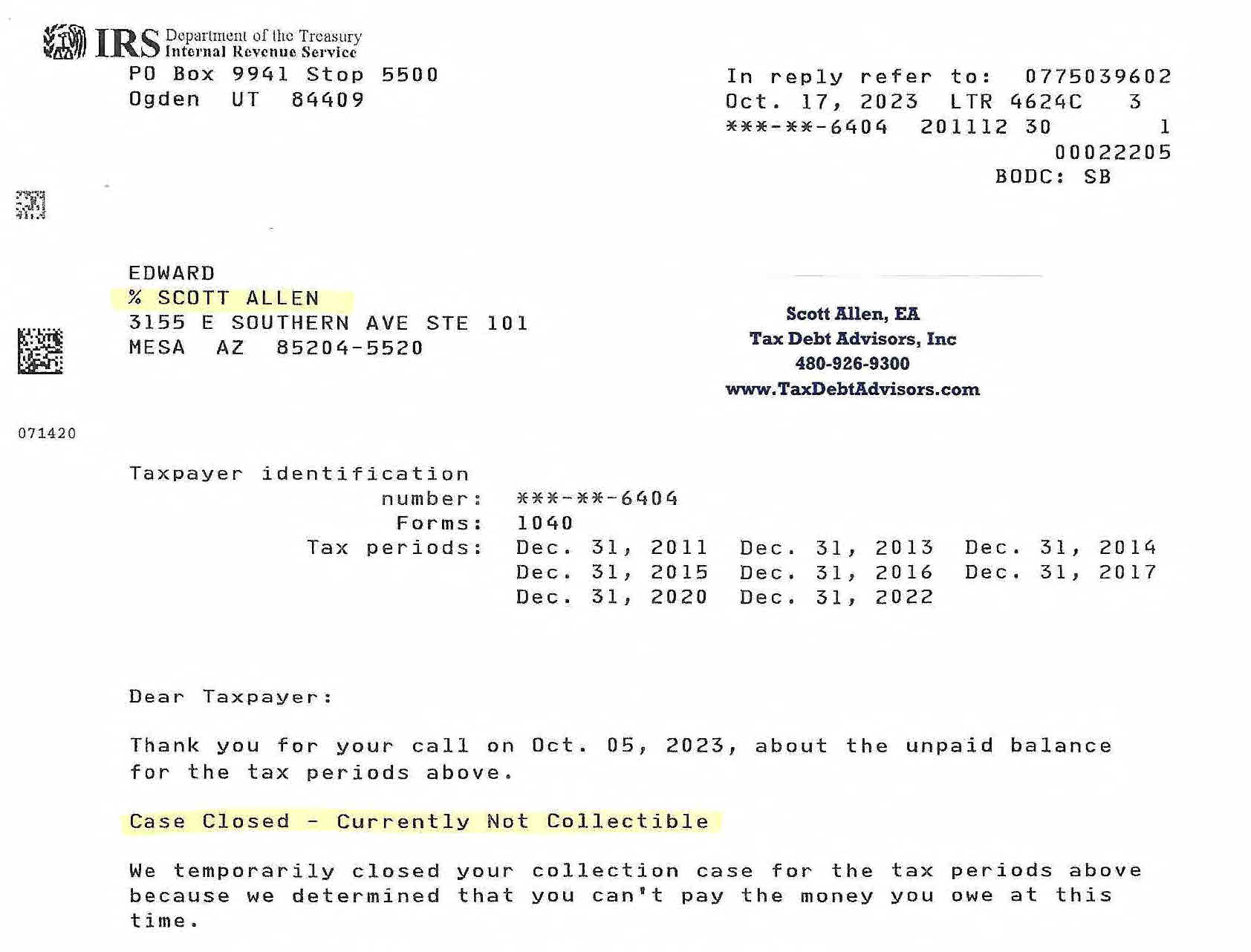
Currently Not Collectible (CNC) Status: Pausing all collection activities if the taxpayer is currently undergoing financial hardship, ensuring the IRS cannot garnish wages or freeze accounts.
-
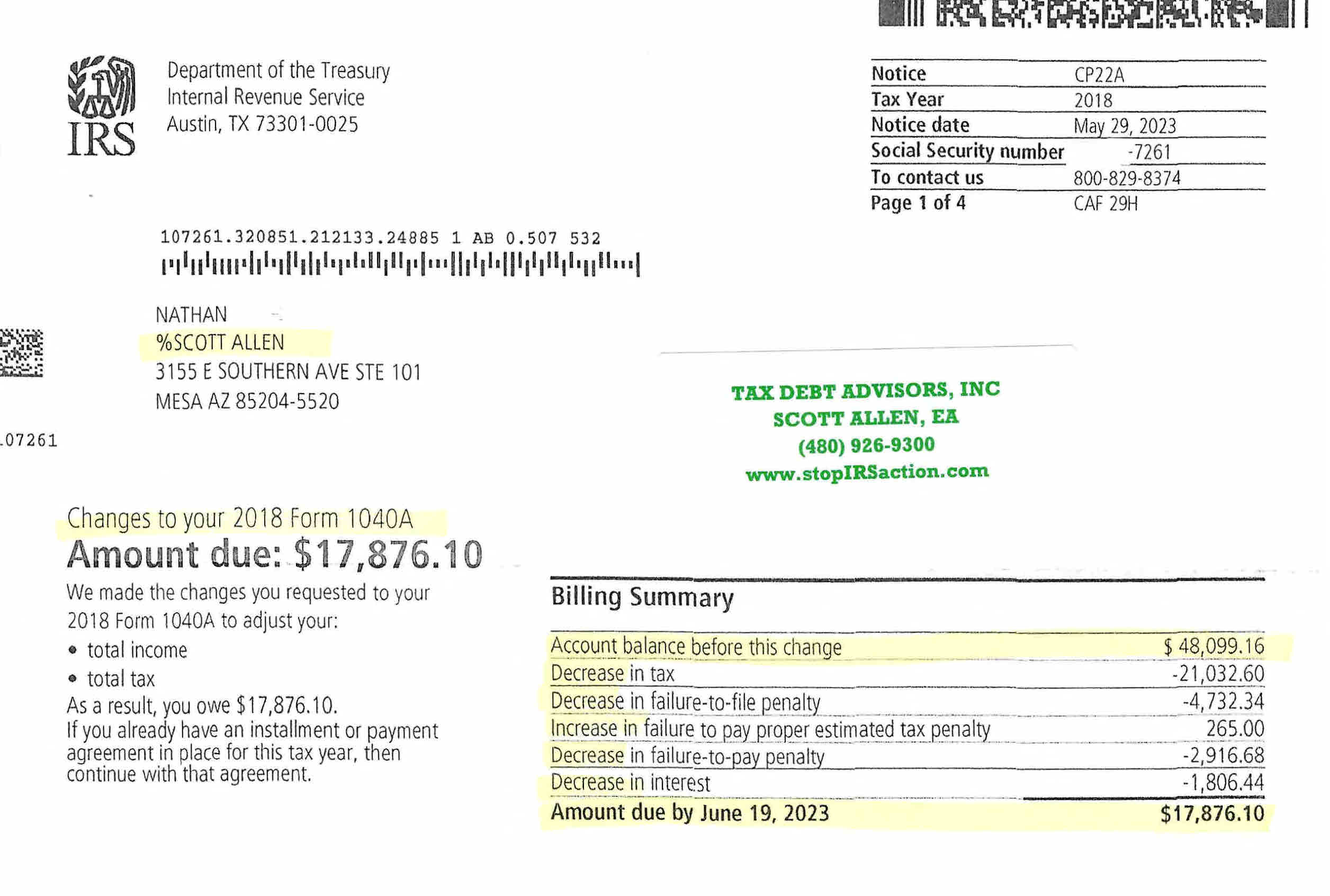
Penalty Abatement: Requesting the removal of administrative late-filing or late-payment penalties where reasonable cause exists.
Why Local Representation Matters in Mesa, AZ
Navigating federal tax law requires precision, transparency, and localized expertise. Out-of-state “tax relief mills” often promise unrealistic results, charging hefty upfront fees only to place clients into automated programs that do not solve the underlying problems.
Working with a local Mesa, Arizona family business like Tax Debt Advisors, Inc. offers clear advantages:
-
Direct Access to an Licensed Enrolled Agent: Clients work directly with Scott Allen, EA, ensuring personalized representation rather than being passed between call-center operators.
-
Proven Local Track Record: Decades of serving the East Valley community means deep experience with both IRS federal policies and Arizona Department of Revenue state tax resolutions.
-
End-to-End Resolution: From organizing missing books and filing delinquent returns to finalizing installment agreements like Letter LTR 2273C, every step of the resolution process is handled under one roof.
Take the First Step Toward Tax Relief
Receiving IRS notices like LTR 2273C is a clear sign that action must be taken. Tax debt rarely resolves itself, and interest and statutory penalties continue to compound daily on unpaid balances. Whether facing multiple years of unfiled back taxes, missing receipts, or complex IRS debt negotiations, professional assistance is readily available.
Scott Allen, EA at Tax Debt Advisors, Inc. provides the expertise required to represent taxpayers before the IRS, reconstruct missing income documentation, prepare accurate back tax returns, and negotiate IRS debt in Mesa, AZ.
To put an end to IRS collection notices and secure peace of mind, contact Tax Debt Advisors, Inc. today to schedule a confidential consultation.
Tax Debt Advisors, Inc.
3155 E Southern Ave Ste 101
Mesa, AZ 85204
Phone: (480) 926-9300
Website: www.taxdebtadvisors.com